The Best High-Protein Foods (Animal and Plant)
The best high-protein foods ranked by protein per 100 calories, animal and plant, with USDA portions and what complete protein does and does not mean.
Ranked by protein per 100 calories, the best high-protein foods are shrimp, canned tuna, cod and skinless poultry, at 19 to 24 grams each in USDA FoodData Central. Nonfat dairy follows at 17 grams, tofu and tempeh at 11 to 12, and beans and lentils at 6 to 8.
Key takeaways
- Rank by protein per 100 calories rather than per portion: shrimp and salmon both give about 20 grams per 3 ounces, for 84 calories and 175 respectively.
- The ranking is largely a ranking of fat content, with lean fish, shellfish and skinless poultry at the top and cheese at the bottom.
- Soy foods lead the plant list, and a cup of lentils still brings 16 grams of fiber alongside its 18 grams of protein.
- Harvard’s Nutrition Source names quinoa and chia seeds among the complete plant proteins, and advises variety across the day rather than pairing foods at one meal.
- Reaching 100 grams of protein from beans alone would take roughly seven cups and about 1,500 calories, which is why soy foods exist in this conversation.
This is general information for healthy adults, not medical advice, and it does not replace a doctor or a registered dietitian.
How the best high-protein foods should be ranked
By protein per 100 calories, not by protein per portion. A portion is an arbitrary unit that anyone can enlarge; the ratio tells you what the protein costs in energy, which is the number that matters when a daily calorie budget exists. Salmon and shrimp both give about 20 grams per 3-ounce serving, but salmon costs 175 calories and shrimp costs 84. Neither is better food. They are different purchases.
Total protein needs come first, and The Nutrition Source at Harvard T.H. Chan School of Public Health sets the Recommended Dietary Allowance at 0.8 grams per kilogram of body weight per day, with an acceptable range of 10% to 35% of daily calories. The tables here are about how to fill that number, not what it should be. For the target itself, see how much protein per day you need.
Animal sources, by protein per calorie
All figures from USDA FoodData Central for the portion named.
| Food and portion | Protein | Calories | Protein per 100 cal |
|---|---|---|---|
| Shrimp, cooked, 3 oz (85 g) | 20 g | 84 | 24 g |
| Canned light tuna in water, drained, 3 oz (85 g) | 22 g | 99 | 22 g |
| Cod, Atlantic, cooked, 3 oz (85 g) | 19 g | 89 | 21 g |
| Turkey breast, roasted, 3 oz (85 g) | 26 g | 125 | 21 g |
| Chicken breast, roasted, skinless, 4 oz (113 g) | 35 g | 186 | 19 g |
| Pork tenderloin, roasted, 3 oz (85 g) | 22 g | 122 | 18 g |
| Cottage cheese, lowfat 1%, 1 cup (226 g) | 28 g | 163 | 17 g |
| Greek yogurt, plain nonfat, 1 cup (227 g) | 23 g | 133 | 17 g |
| Ground beef, 90% lean, cooked, 3 oz (85 g) | 22 g | 184 | 12 g |
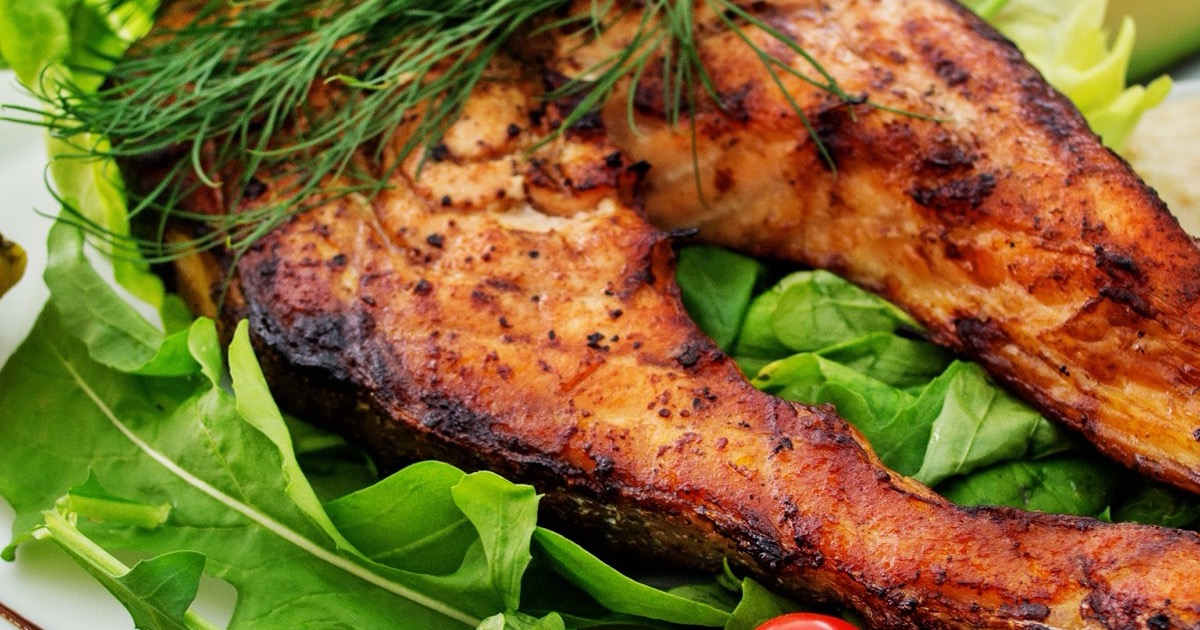
| Salmon, Atlantic farmed, cooked, 3 oz (85 g) | 19 g | 175 | 11 g |
| Egg, large (50 g) | 6 g | 72 | 9 g |
| Milk, 1%, 1 cup (244 g) | 8 g | 102 | 8 g |
| Cheddar cheese, 1 oz (28 g) | 7 g | 115 | 6 g |
The ranking is essentially a ranking of fat content. Lean white fish, shellfish and skinless poultry sit at the top because there is almost nothing in them except protein and water. Cheese sits at the bottom for the same reason in reverse. Salmon’s lower ratio buys omega-3 fat, which is a reason to eat it rather than an argument against it.
Plant sources, by protein per calorie
| Food and portion | Protein | Calories | Protein per 100 cal |
|---|---|---|---|
| Firm tofu, 1/2 cup (126 g) | 22 g | 181 | 12 g |
| Tempeh, 1 cup (166 g) | 34 g | 319 | 11 g |
| Edamame, shelled and prepared, 1 cup (155 g) | 18 g | 188 | 10 g |
| Lentils, cooked, 1 cup (198 g) | 18 g | 230 | 8 g |
| Black beans, cooked, 1 cup (172 g) | 15 g | 227 | 7 g |
| Green peas, cooked, 1 cup (160 g) | 9 g | 134 | 6 g |
| Chickpeas, cooked, 1 cup (164 g) | 15 g | 269 | 6 g |
| Pumpkin seeds, roasted, 1 oz (28 g) | 9 g | 163 | 5 g |
| Quinoa, cooked, 1 cup (185 g) | 8 g | 222 | 4 g |
| Almonds, 1 oz (28 g) | 6 g | 164 | 4 g |
| Peanut butter, 2 tbsp (32 g) | 7 g | 188 | 4 g |
Soy foods lead the plant list because soybeans are unusually protein-dense for a legume. Beans and lentils rank lower on this measure and still earn their place: The Nutrition Source states that eating around one daily serving of beans, chickpeas, lentils or peas can increase fullness, which may lead to better weight management, and a cup of lentils supplies 16 grams of fiber alongside its 18 grams of protein.
Does complete protein matter in practice?
Less than the phrase suggests, as long as the diet has variety. The Nutrition Source notes that animal-based foods such as meat, poultry, fish, eggs and dairy tend to be good sources of complete protein, while plant-based foods often lack one or more essential amino acid. That is a description of individual foods, not of diets.
Three practical points follow:
- Some plant foods are complete on their own. The Nutrition Source names quinoa and chia seeds among the complete plant proteins, and soy belongs on the same short list.
- The combinations do not have to happen at the same meal. The Nutrition Source advises those who abstain from animal foods to eat a variety of protein-containing plant foods each day, not to pair rice with beans in a single sitting.
- Volume is the real constraint. Reaching 100 grams of protein from beans alone means eating roughly seven cups of them and about 1,500 calories. Tofu, tempeh and edamame exist to solve exactly that problem.
Source also appears to matter for reasons beyond amino acids. The Nutrition Source reports that across 32 years of study data the percentage of calories from total protein was not related to overall mortality, but that the source of the protein was.
What this article does not cover
These are portion figures for healthy adults, not a meal plan and not a prescription. This article does not set an individual protein target, does not address pregnancy, breastfeeding, children or adolescents, and is not written for anyone with a history of disordered eating or with kidney or liver disease. It makes no claim about weight change. For the between-meal application of the same tables, see these high-protein snacks, and for the morning one, these high-protein breakfast ideas.
Kalo.Quest is an app on Google Play and the App Store that returns calories, protein, carbohydrates and fat from a photo of the plate or a written description of the meal, logged into the day’s journal. It is free and ad supported, with a limit of 30 photo analyses a day and an optional rewarded video that adds one more. There is no account to create.
FAQ
Which food has the most protein per serving?
Among common portions, a 4-ounce roasted chicken breast at 35 grams and a cup of tempeh at 34 grams lead the list, according to USDA FoodData Central. Per calorie the answer is different: shrimp gives 24 grams of protein for every 100 calories, roughly double what an equal-calorie portion of ground beef delivers. Which measure to use depends on whether the constraint is appetite or calories.
Do plant proteins count for less than animal proteins?
Not by much in a varied diet. The Nutrition Source at Harvard T.H. Chan School of Public Health names quinoa and chia seeds as complete plant proteins and advises eating a variety of protein-containing plant foods each day to obtain all the amino acids needed. The genuine differences are density and digestibility: plant sources generally arrive with more carbohydrate and fiber per gram of protein, which affects the calorie arithmetic more than it affects the amino acids.
Is processed meat a reasonable protein source?
Deli turkey and jerky score well on protein per calorie and poorly on sodium. Research conducted at Harvard T.H. Chan School of Public Health has found that eating even small amounts of red meat, especially processed red meat, on a regular basis is linked to an increased risk of heart disease and stroke. Treating them as convenience items rather than staples is the usual compromise. Fresh poultry, fish, eggs, dairy and legumes cover the same protein at a lower sodium cost.
This article is general information, not medical advice. For personal guidance, talk to a healthcare professional.