10 High-Protein Breakfast Ideas to Start Your Day
A high-protein breakfast means about 25 to 30 grams before you leave. Ten options with the protein and calories per portion, from USDA figures.

A high-protein breakfast means about 25 to 30 grams of protein, the per-meal figure Leidy and colleagues set out in the American Journal of Clinical Nutrition in June 2015. Cereal with milk, a bagel, or a granola bar and a banana each finish under 12 grams, so one dense item has to join the plate.
Key takeaways
- One cup of lowfat cottage cheese with a sliced peach clears the threshold alone: 29 grams of protein for 222 calories, by USDA FoodData Central.
- Cottage cheese and plain Greek yogurt are the cheapest protein in this list, roughly 7 to 8 calories per gram of protein.
- Oatmeal cooked in milk with peanut butter costs about 20 calories per gram of protein, which buys fiber and staying power rather than protein.
- The Leidy review found higher-protein meals raised fullness without reliably reducing intake at the following meal.
- Harvard T.H. Chan School of Public Health puts the Recommended Dietary Allowance at 0.8 grams per kilogram, about 50 grams a day for a 140-pound adult.
This is general information for healthy adults, not medical advice, and it does not replace a doctor or a registered dietitian.
What counts as a high-protein breakfast?
Twenty-five grams is the working threshold, and thirty is comfortable. That number comes from the per-meal recommendation in the Leidy review rather than from any daily total, which is why it applies to breakfast specifically. For context, The Nutrition Source at Harvard T.H. Chan School of Public Health puts the Recommended Dietary Allowance at 0.8 grams per kilogram of body weight, about 50 grams a day for a 140-pound person, so a single 28-gram meal covers more than half of the floor.
Breakfast is where most people fall shortest, and the reason is structural. The foods that dominate American mornings are grain-based and sweet: toast, cereal, pastries, oatmeal on its own, fruit. None of them carry much protein. Fixing the meal usually means adding one dense item rather than rebuilding the plate.
Ten high-protein breakfast ideas, with the numbers
Every figure below is the sum of USDA FoodData Central entries for the components named, rounded to whole grams and calories.
| Breakfast | Protein | Calories |
|---|---|---|
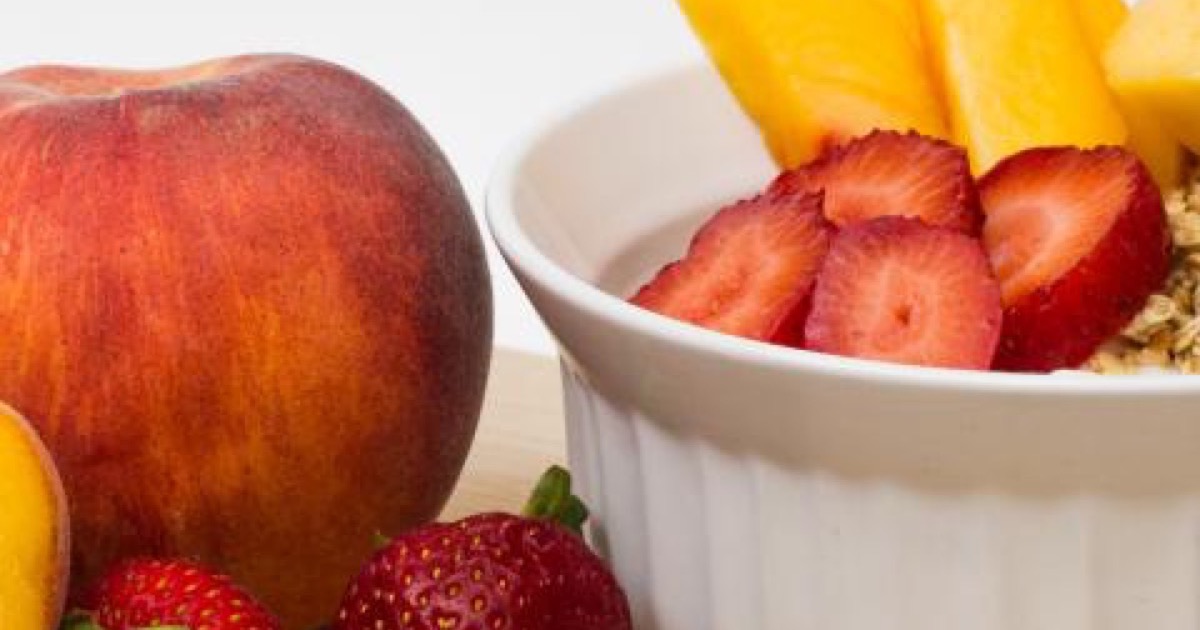
| Cottage cheese, lowfat 1%, 1 cup (226 g), with a sliced peach | 29 g | 222 |
| Greek yogurt, plain nonfat, 1 cup (227 g), with 1/2 cup blueberries | 24 g | 176 |
| Two eggs with two slices of Canadian bacon (2 oz) | 24 g | 227 |
| Three eggs scrambled with a cup of spinach | 20 g | 230 |
| Two-egg omelet with 1 oz sharp cheddar | 19 g | 259 |
| Smoked salmon, 3 oz (85 g), on a slice of whole-wheat toast | 20 g | 181 |
| Firm tofu, 1/2 cup (126 g), scrambled with peppers and onion | 22 g | 205 |
| Rolled oats, 1/2 cup dry, cooked in 1% milk, with 1 tbsp peanut butter | 17 g | 348 |
| Two eggs on a slice of whole-wheat toast | 17 g | 225 |
| Black beans, 1/2 cup, with one fried egg and salsa | 14 g | 215 |
Read the two columns against each other. Cottage cheese and Greek yogurt are the cheapest protein in the list in calorie terms, roughly 7 to 8 calories per gram of protein. The oatmeal bowl is the most expensive at about 20, which is fine if you want the fiber and the staying power, and worth knowing if you are eating inside a calorie deficit.
Three of the entries fall under 20 grams. Pairing any of them with a cup of milk (8 grams) or a hard-boiled egg (6 grams) closes the gap without much thought.
Does protein at breakfast actually change the rest of the day?
It moves appetite, modestly and measurably. The Leidy review found that higher-protein meals produced greater perceived fullness and higher satiety hormone responses in acute feeding trials, while noting that this did not reliably cut intake at the following meal. The effect is real without being decisive.
A separate trial by Leidy and colleagues, published in Obesity in April 2011, tested frequent higher-protein meals during weight loss in overweight and obese men and reported improvements in daily appetite control and fullness compared with a normal-protein pattern. Two findings sit behind that: protein is the macronutrient with the strongest satiety signal per calorie, and a morning meal built around it tends to postpone the mid-morning search for something to eat.
The Leidy review is blunt about what decides the outcome over months. Longer-term results conflicted, and the review attributes the discrepancy mainly to compliance. A high-protein breakfast that you dislike and abandon in three weeks does nothing at all.
How do you assemble one on a weekday morning?
- Cook eggs once for the week. A dozen hard-boiled eggs on Sunday is 72 grams of protein sitting in the refrigerator.
- Buy the plain versions. Flavored yogurt trades protein for sugar by volume. Plain nonfat Greek yogurt carries 23 grams a cup; a sweetened fruit-on-the-bottom cup of the same size usually carries less protein and 100 more calories.
- Add one dense item to the breakfast you already eat. Oatmeal plus a scoop of cottage cheese stirred in, toast plus two eggs, fruit plus a container of skyr.
- Keep cottage cheese in the house. At 28 grams a cup it single-handedly clears the threshold, and it needs no cooking.
- Weigh nut butter for two weeks. One tablespoon is 94 calories. What most people spread is closer to three.
If you are also tracking, one photo of the plate returns the protein number without arithmetic, which is the practical case for tracking macros for a fortnight before deciding whether the meal needs changing.
What this article does not cover
These are general portion figures for healthy adults. This article does not prescribe a diet, does not address protein needs during pregnancy or breastfeeding, does not apply to children or adolescents, and is not written for anyone with a history of disordered eating or with kidney or liver disease, all of whom need individual guidance. Nothing here promises a specific amount of weight change. For the daily total that these meals fit inside, see how much protein per day you need.
Kalo.Quest is an app on Google Play and the App Store that returns calories, protein, carbohydrates and fat from one photo of the plate, logged straight into the day’s journal. It is free and ad supported, with a limit of 30 photo analyses a day and an optional rewarded video that adds one more. There is no account to create.
FAQ
Is 30 grams of protein at breakfast too much at once?
No. The 25 to 30 gram figure in the Leidy review is a per-meal recommendation, not a ceiling, and the older claim that the body can only use 20 or 30 grams per sitting has not held up in the evidence on daily totals. Harvard T.H. Chan School of Public Health places the acceptable range for protein at 10% to 35% of daily calories, which on a 2,000-calorie day allows about 175 grams.
What is the lowest-calorie way to get 25 grams of protein in the morning?
Plain nonfat Greek yogurt and lowfat cottage cheese, at roughly 130 to 165 calories per cup for 23 to 28 grams of protein, according to USDA FoodData Central. Egg whites are cheaper still, at about 17 calories and 3.6 grams of protein per large white, so seven of them reach 25 grams for around 120 calories. Whole eggs, cheese and nut butters all deliver protein alongside considerably more fat and therefore more calories.
Does skipping breakfast entirely cancel the benefit?
Not necessarily. Daily protein total does most of the work, so a skipped breakfast can be compensated at lunch and dinner without much loss. The practical argument for eating in the morning is that reaching 100 grams or more across two meals takes more planning than across three, and that appetite control tends to be easier when the first meal is substantial.
This article is general information, not medical advice. For personal guidance, talk to a healthcare professional.