How to Track Macros: A Beginner's Guide
How to track macros without it taking over your day: set targets from your calories, log the big items, and let one photo return protein, carbs and fat.
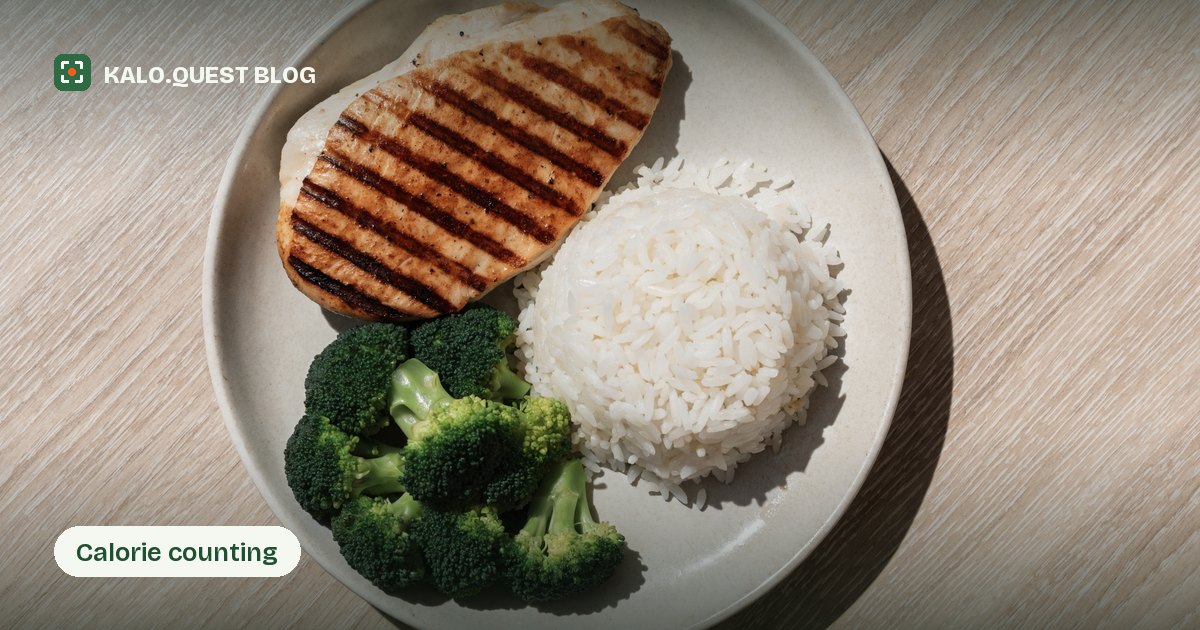
Here is how to track macros without losing your mind: set a calorie target first, convert it into grams of protein, carbohydrate and fat, then log the three or four items in each meal that carry most of the numbers. Protein is the target worth defending; the split between carbohydrate and fat matters far less than the internet suggests, and two large randomized trials say so.
This is general information for healthy adults. It is not medical advice and does not replace a doctor or a registered dietitian.
What does it mean to track macros?
Macros are the three macronutrients that carry the energy in food: protein, carbohydrate and fat. Tracking them means recording grams of each, not just the calorie total.
The conversion is fixed. Using the standard factors behind USDA FoodData Central, protein and carbohydrate supply about 4 calories per gram and fat about 9. Alcohol supplies about 7 calories per gram, which is why a drink is neither a macro target nor a free pass: it carries energy without contributing to any of the three.
Counting calories tells you how much energy you ate. Tracking macros tells you what that energy was made of, and the practical difference shows up in how much muscle you keep while losing fat.
How do you set your macro targets in grams?
Start from calories, then divide. Your calorie total comes first because macros are only a way of splitting it; your daily calorie number explains how to get it.
For protein there is a published range: the National Academy of Medicine sets an acceptable intake of 10% to 35% of daily calories, as cited by The Nutrition Source at Harvard T.H. Chan School of Public Health. A worked example on a 2,000-calorie day, using 25% protein, 30% fat and the remainder as carbohydrate:
| Macro | Share of calories | Calories | Grams |
|---|---|---|---|
| Protein | 25% | 500 | 125 g |
| Fat | 30% | 600 | 67 g |
| Carbohydrate | 45% | 900 | 225 g |
The protein figure is the one to treat as a floor rather than a ceiling; how much protein per day gives the ranges by body weight, which is a better way to set it than a percentage. The other two rows are an example of a workable split, not a prescription.
Kalo.Quest performs that division itself: it builds a daily calorie goal from your profile and your weight goal, splits it into daily gram targets for protein, carbohydrate and fat, and shows the three of them filling up through the day. Each photo you log returns calories together with protein, carbohydrate and fat, so the grams arrive already attached to the meal instead of being typed in after it.
Does the carb-to-fat split change how much weight you lose?
Two large randomized trials say it does not, at matched calories. Sacks and colleagues assigned 811 overweight adults to four diets with different fat, protein and carbohydrate targets and followed them for two years, reporting in the New England Journal of Medicine on February 26, 2009 that weight loss was similar across all four and concluding that reduced-calorie diets work regardless of which macronutrient they emphasize.
The DIETFITS trial reached the same place from a different direction. Gardner and colleagues randomized 609 adults to a healthy low-fat or a healthy low-carbohydrate diet for 12 months and published in JAMA on February 20, 2018: weight change was 5.3 kg on low-fat against 6.0 kg on low-carbohydrate, a between-group difference of 0.7 kg that was not statistically significant, and neither genotype nor insulin secretion predicted who did better on which.
The useful reading is not that macros are pointless. It is that the carbohydrate-to-fat argument is settled enough to stop spending attention on, leaving protein and total calories as the two numbers that repay it.
How do you track macros without weighing every meal?
Log the big rocks and estimate the rest. In almost every meal, three items carry the numbers: the protein source, the main carbohydrate, and the added fat. A splash of sauce or a few crackers will not change your day.
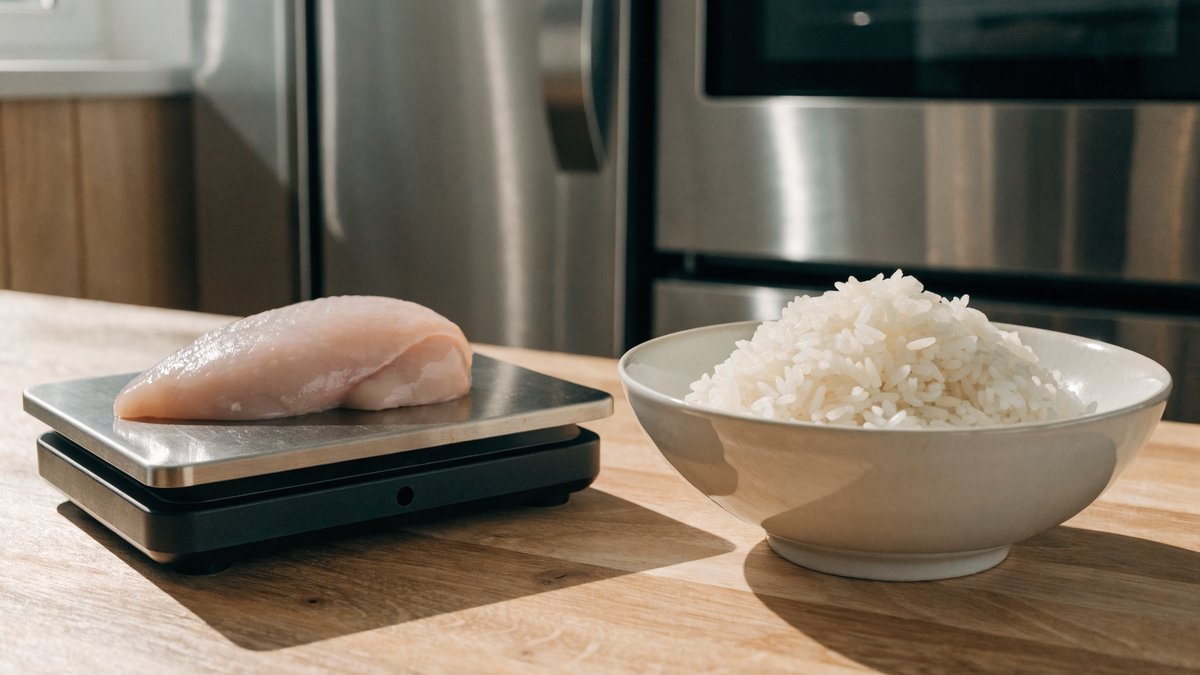
A kitchen scale raises precision, and precision is not the constraint. The constraint is whether you are still logging in week three. Learning how to track macros with a rough but consistent method beats an exact method you abandon, because a log with holes in it cannot be read as a trend at all.
The routine, in four steps:
- Set the calorie target first. Macros are a division of that total, so the total has to exist before the split makes sense.
- Set a protein floor. Decide a daily gram figure and treat it as the one number you really try to reach. Carbohydrate and fat can float.
- Log at the meal, not at midnight. Reconstructing a day from memory at night is where accuracy goes to die, and it is also where the habit dies.
- Review the weekly average. One high-fat day means nothing. The pattern across seven days is the signal.
The friction in step three is what ends most attempts. Searching a database, picking between six entries for the same chicken, guessing a portion: that is the part people quit. Photographing the plate and getting the three numbers back removes it, and the same method rescues you where manual logging is hopeless, which is eating at a restaurant.
How long should you track macros for?
Long enough to calibrate, then in bursts. Most people log closely for four to six weeks, build a usable sense of what 30 grams of protein looks like, and then loosen.
What you should not do is assume the calibration holds forever. In the New England Journal of Medicine of December 31, 1992, Lichtman and colleagues found that subjects who believed they were eating under 1,200 calories a day were in fact underreporting their intake by 47% on average, and overreporting their activity by 51%. Estimation drifts, silently and in one direction. A week of honest logging every couple of months is what catches the drift before the scale does.
When is macro tracking a bad idea?
Counting grams is not appropriate for everyone. Skip it, or do it only under professional supervision, if you have a history of an eating disorder or disordered eating, if you are under 18, if you are pregnant or breastfeeding, or if a clinician has prescribed a specific intake for a medical condition. If logging food makes you anxious, preoccupied or rigid about meals, that is a reason to stop rather than to try harder.
This guide covers setting and hitting macro targets. It does not compare specific diets, does not treat any medical condition, and is not a substitute for advice from a healthcare professional.
The part of how to track macros worth automating is the arithmetic, not the judgment: deciding what to eat stays yours, adding it up does not. Kalo.Quest is an app on Google Play and the App Store that reads calories, protein, carbohydrate and fat from a photo of the plate and counts them against the day’s gram targets. It is free and ad supported, with an ad after each analysis and a limit of 30 photo analyses a day; an optional rewarded video adds one more, and there is no account to create.
FAQ
Do you need to track macros, or is counting calories enough?
Calories alone determine weight change, so counting them is enough for that one purpose. Macros matter for what the weight is made of: protein intake is what preserves lean mass while you lose fat. If you only add one number to your calorie count, add protein grams and leave carbohydrate and fat unmonitored.
What happens if you hit your calories but miss your macros?
Your weight will still respond to the calorie total, since that is what the Sacks and DIETFITS trials measured. Missing protein repeatedly is the version that costs you something, because muscle is the tissue you lose when protein runs low during a deficit. Missing a carbohydrate or fat target while calories and protein hold is close to irrelevant.
Does alcohol count as a macro?
Not as one of the three, but it carries about 7 calories per gram, which is closer to fat than to carbohydrate. Most tracking tools fold those calories into the day’s total without assigning them to protein, carbohydrate or fat, so a drinking night can hit your calorie ceiling while your three gram targets still look untouched.
This article is general information, not medical advice. For personal guidance, talk to a healthcare professional.