The Best Way to Track Calories for Beginners
Research says logging frequency beats logging precision. How the four methods compare, which to start with, and a first week that survives month two.
The best way to track calories is the method you are still using in month three. Harvey and colleagues, in Obesity in March 2019, followed 142 adults and found that those losing 10% or more of their starting weight opened their food journal 2.7 times a day, against 1.7 for everyone else.
Key takeaways
- Frequency beat precision in that trial: time spent per day did not separate the two groups, the number of times people came back did.
- Logging gets faster rather than slower. The same study measured 23.2 minutes a day in month one and 14.6 minutes by month six.
- Burke and colleagues reviewed 22 studies and found self-monitoring consistently associated with weight loss, while rating the level of evidence weak.
- Photograph the plate for everything and reserve the scale for dense foods: USDA FoodData Central lists olive oil at 884 calories per 100 grams.
- Judge nothing for three weeks, then read three weekly weight averages rather than three mornings.
This article is general information for healthy adults, not medical advice, and it does not replace a doctor or a registered dietitian.
What the evidence actually supports
Self-monitoring is consistently associated with weight loss, and the honest summary includes a caveat. Burke and colleagues reviewed 22 studies published between 1993 and 2009 in the Journal of the American Dietetic Association of January 2011 and reported a significant association between self-monitoring and weight loss across the literature, while rating the level of evidence as weak because of methodological limits: most samples were predominantly white and female, and adherence was measured by self-report.
The same Harvey study found something useful for anyone dreading the workload. Participants spent an average of 23.2 minutes a day logging in month one and 14.6 minutes by month six. The task gets faster as your usual meals become repeat entries, which is the opposite of how most beginners expect it to go.
The four methods, compared
Every calorie app is some combination of these four. They differ in effort, in what they handle well, and in where the error lands.
| Method | Effort per meal | Handles well | Main weakness |
|---|---|---|---|
| Photo of the plate | 5 to 10 seconds | Home cooking, restaurant plates, anything unlabeled | Estimates portion weight and hidden fat |
| Barcode scan | 5 seconds | Packaged food eaten as sold | Useless once food is cooked or plated |
| Database search | 30 to 60 seconds | Common single foods | Entry quality varies; slow enough to be skipped |
| Weighed recipe entry | 3 to 10 minutes once | Meals you cook repeatedly | Only pays off if you eat it often |
Notice that the fastest two are also the two that fail on the most common eating situation, which is a cooked plate of mixed food. That tension is the whole design problem, and it is why the best way to track calories is usually a combination of two methods rather than a single one.
So what is the best way to track calories in the first month?
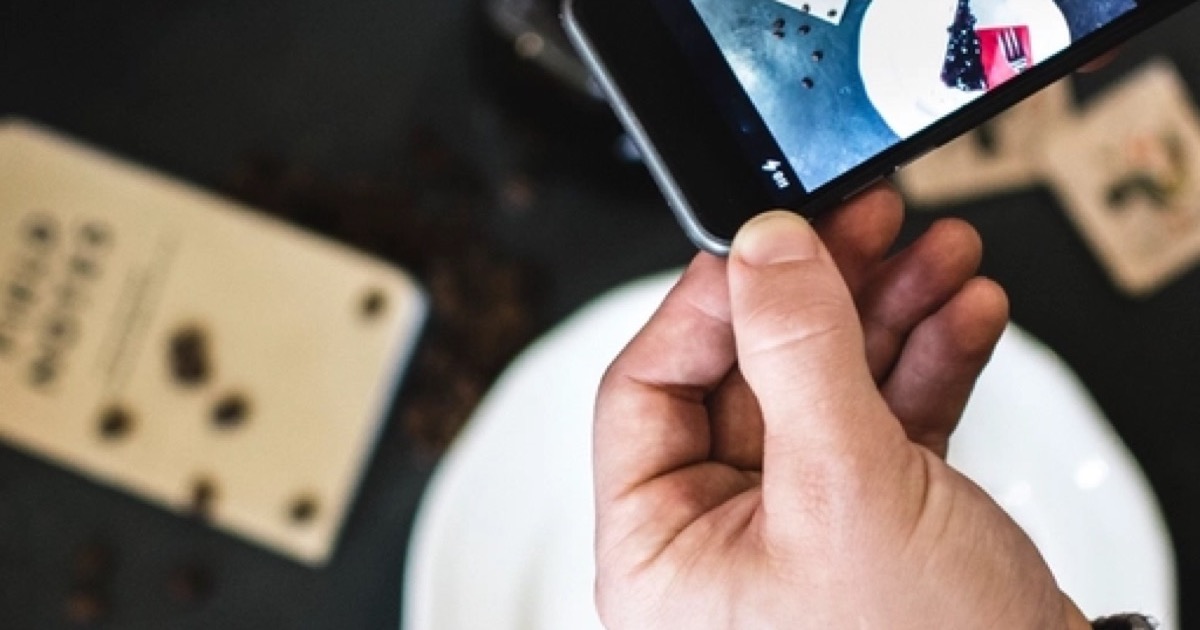
Photograph the plate for everything, weigh only the dense foods, and do not chase accuracy you will abandon. The reasoning is arithmetic rather than preference: a method costing ten seconds gets used at every meal, and a complete log with a 20% error tells you more than a precise log missing four meals a week.
The foods worth a scale are the ones where a small visual error is expensive. USDA FoodData Central lists olive oil at 884 calories per 100 grams and smooth peanut butter at 598, so a generous spoon of either is worth more than a side of vegetables. Vegetables, fruit, soup and lean protein tolerate estimation well. The full set of no-scale techniques is in tracking calories without weighing your food.
A first week that survives month two
- Set a target before you log anything. Your daily calorie number works it out from body size, age and activity, so the log has something to be measured against.
- Log at the table, not at bedtime. Recall drops small items first, and small items are usually fats.
- Log the bad days too. A day you skip because it went badly is the day that would have explained a flat week.
- Photograph, then adjust the portion. The correction takes two seconds and removes most of the error that matters, as counting calories from a photo explains in detail.
- Judge nothing for three weeks. Then read three weekly weight averages, not three mornings.
What beginners should ignore at the start
Four things absorb attention in month one and change almost nothing.
- Macro ratios. Protein has a real job during weight loss, and the rest of the split can wait. Tracking macros is a month-two skill.
- Meal timing. No evidence supports an eating window mattering more than the weekly total for weight change.
- Single-day totals. Weekly averages are the unit that means anything.
- Perfect entries for restaurant food. Estimate it, log it, move on. An entry that is 150 calories off still beats no entry.
Where calorie tracking is the wrong tool
Tracking is not appropriate for everyone. It should not be used during pregnancy or breastfeeding, by anyone under 18, or by anyone with a history of an eating disorder, and it is not a substitute for an intake prescribed by a clinician. If logging food starts producing anxiety, guilt or preoccupation, stopping is the correct response, and a healthcare professional is the right person to take that to.
This article compares logging methods for healthy adults. It does not prescribe an intake for anyone, does not promise a rate of weight change, and does not cover medical causes of weight change.
Kalo.Quest is an app on Google Play and the App Store that implements the photo-first approach described here: photograph the plate and it returns calories, protein, carbohydrates and fat into the day’s journal, or describe the meal in words instead. It also tracks weight, logs workouts back into the day’s budget, shows daily, weekly and monthly history with averages and streaks, and puts remaining calories on a home screen widget. It has no barcode scanner and no browsable food database. It is free and ad supported, allows up to 30 photo analyses a day with an optional rewarded video for one more, and requires no account.
FAQ
How long do you have to track calories before it tells you anything?
Three weeks, read as three weekly weight averages against three weeks of logs. Anything shorter is dominated by water and glycogen shifts rather than by energy balance. After that first block, most people find the daily work drops sharply, which matches the Harvey finding that average logging time fell from 23.2 minutes a day in month one to 14.6 minutes by month six.
Is a photo app or a barcode scanner the better place to start?
It depends on what you eat. A barcode scanner is the more accurate route for packaged food eaten straight from the package, because the printed label removes the portion estimate entirely. A photo app is the better route for cooked meals, restaurant plates and anything without a label, which for most adults is the majority of what lands on the plate.
Do you have to track calories forever?
No, and most people do not. Tracking teaches portion sizes and the calorie cost of the foods you eat most, which is knowledge that stays after the logging stops. A common pattern is to log closely for a few months, then keep only a weekly weigh-in and return to full tracking if the trend moves in a direction you did not choose.
This article is general information, not medical advice. For personal guidance, talk to a healthcare professional.