Good Fats vs Bad Fats: A Simple Guide
Good fats vs bad fats, settled with numbers: which fats to favor, the saturated fat ceiling on a 2,000 calorie day, and the grams in real portions.
Good fats vs bad fats, in one line: good fats are the unsaturated ones, liquid at room temperature, from plants and fish. Bad fats are the artificial trans fats the FDA ordered out of the food supply, plus saturated fat above 10 percent of daily calories, the ceiling Harvard T.H. Chan School of Public Health states.
Key takeaways
- What lowers risk is replacement, not removal: eating unsaturated fat in place of saturated fat lowers LDL cholesterol and improves the total-to-HDL ratio.
- The FDA Daily Value is 78 grams of total fat and 20 grams of saturated fat on a 2,000 calorie day.
- Two ounces of cheddar and one tablespoon of butter come to 18 grams of saturated fat, nearly the whole day, before dinner is cooked.
- A tablespoon of butter carries 7.3 grams of saturated fat against 1.9 in a tablespoon of olive oil, at roughly the same calorie cost.
- Partially hydrogenated oils lost their Generally Recognized as Safe status on June 16, 2015, and older stock had to clear distribution by January 1, 2020.
This is general information for healthy adults, not medical advice, and it does not replace a doctor or a registered dietitian.
What separates a good fat from a bad one?
Chemistry, and then evidence about heart disease. The Nutrition Source at Harvard T.H. Chan School of Public Health lists the food sources of each type without ambiguity:
- Monounsaturated fat: olive, peanut and canola oils, avocados, nuts such as almonds, hazelnuts and pecans, and seeds such as pumpkin and sesame.
- Polyunsaturated fat: sunflower, corn, soybean and flaxseed oils, walnuts, flax seeds, and fish.
- Saturated fat: pizza, cheese, whole and reduced-fat milk, butter, dairy desserts, sausage, bacon, beef, hamburgers, cookies and grain-based desserts.
- Trans fat: what remains of partially hydrogenated oils in older processed foods, plus small natural amounts in meat and dairy.
Harvard states the swap plainly: eating good fats in place of saturated fat lowers LDL cholesterol and improves the ratio of total cholesterol to HDL cholesterol, which lowers heart disease risk. The same page cites the American Heart Association’s suggestion that 8 to 10 percent of daily calories come from polyunsaturated fat, with evidence that going up to 15 percent in place of saturated fat lowers risk further. On trans fat, the figure is blunt: for each additional 2 percent of calories from trans fat consumed daily, coronary heart disease risk rises by 23 percent.
How much fat, and how much saturated fat, in a day?
The Nutrition Facts label gives the reference points. The FDA sets the Daily Value at 78 grams of total fat and 20 grams of saturated fat for adults on a 2,000 calorie day. Twenty grams of saturated fat is 180 calories, which is the 9 percent that sits just under the Dietary Guidelines ceiling.
Twenty grams goes faster than most people expect. Two ounces of cheddar and one tablespoon of butter come to 18 grams, nearly the whole day, before dinner has been cooked.
Which fats are in the foods you actually buy?
Every value below is from USDA FoodData Central, for the portion stated.
| Food and portion | Calories | Total fat | Saturated | Mono | Poly |
|---|---|---|---|---|---|
| Olive oil, 1 tbsp (13.5 g) | 119 | 13.5 g | 1.9 g | 9.9 g | 1.4 g |
| Butter, salted, 1 tbsp (14.2 g) | 102 | 11.5 g | 7.3 g | 3.0 g | 0.4 g |
| Almonds, 1 oz (28.35 g) | 164 | 14.1 g | 1.1 g | 9.0 g | 3.5 g |
| Walnuts, 1 oz (28.35 g) | 185 | 18.5 g | 1.7 g | 2.5 g | 13.4 g |
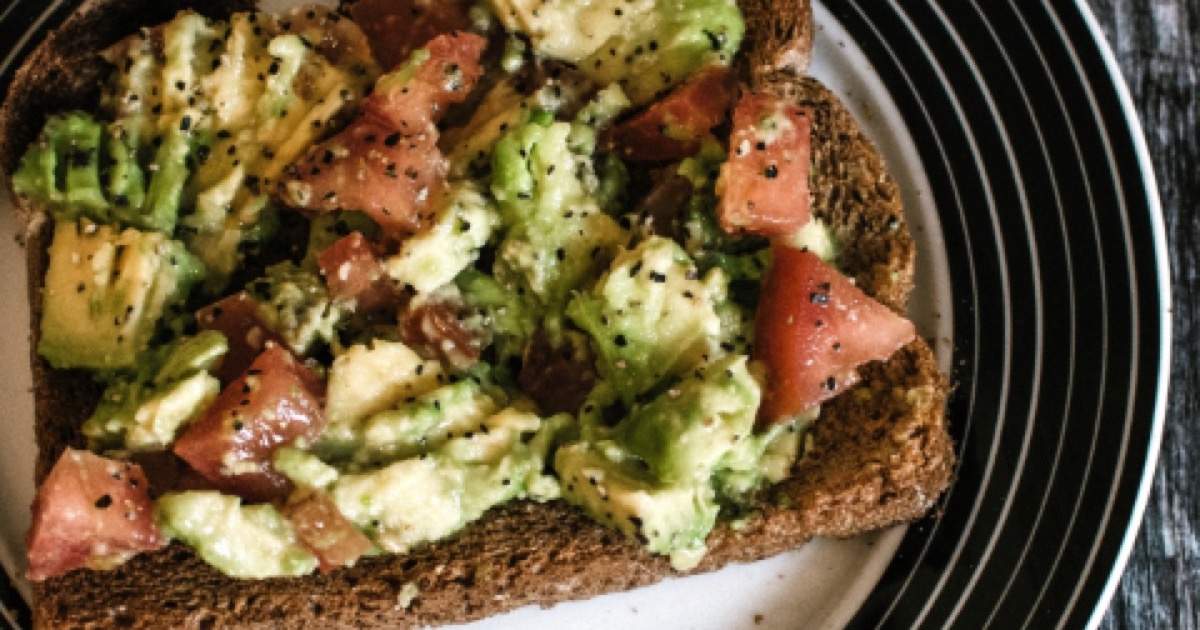
| Avocado, half (100 g) | 160 | 14.7 g | 2.1 g | 9.8 g | 1.8 g |
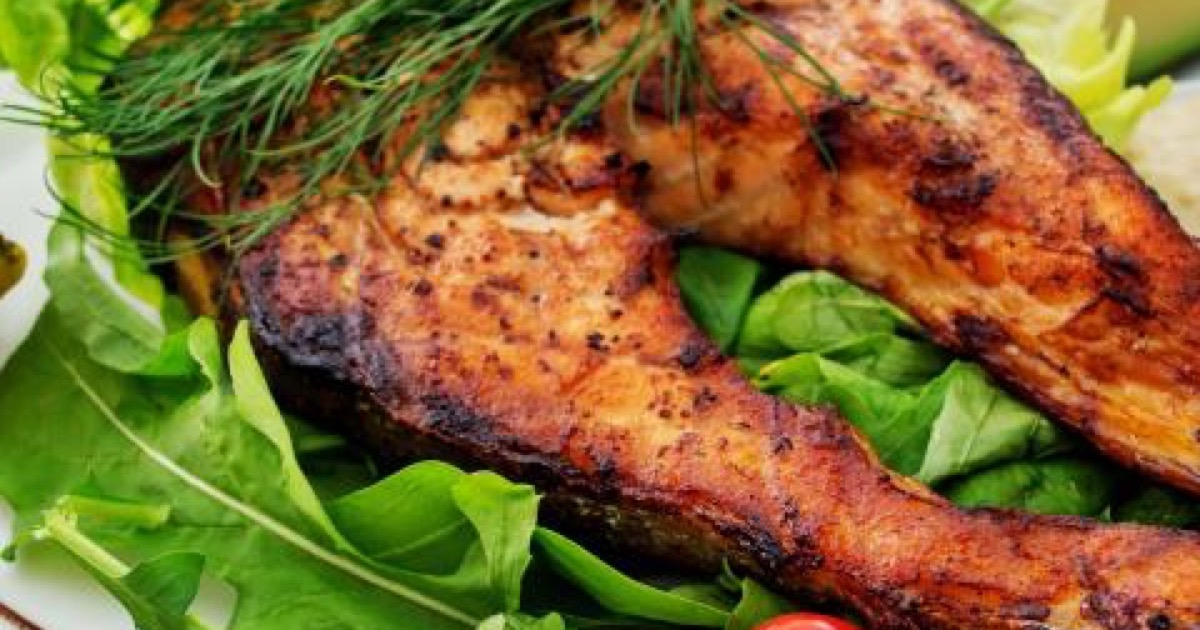
| Salmon, farmed, cooked, 3 oz (85 g) | 175 | 10.5 g | 2.0 g | 3.6 g | 3.9 g |
| Cheddar cheese, 1 oz (28.35 g) | 116 | 9.6 g | 5.4 g | 2.1 g | 0.3 g |
The butter and olive oil rows are the whole argument in miniature. Both are nearly pure fat and cost about the same in calories, and one delivers 7.3 grams of saturated fat while the other delivers 1.9. Walnuts are the outlier in the other direction, carrying 13.4 grams of polyunsaturated fat in a single ounce.
Are trans fats gone from American food?
Almost. On June 16, 2015 the FDA issued its final determination that partially hydrogenated oils are no longer Generally Recognized as Safe, the primary dietary source of artificial trans fat. Manufacturers had to stop adding them by June 18, 2018 for non-petitioned uses, and previously manufactured products had to clear distribution by January 1, 2020, with the petitioned uses running a year behind on each date. The FDA estimated that removing them could prevent thousands of heart attacks and deaths each year.
Trans fat did not vanish entirely, and the FDA says so: it occurs naturally in small amounts in meat and dairy. USDA FoodData Central lists 3.28 grams per 100 grams of salted butter, which is about 0.47 grams in a tablespoon. The natural kind has not been shown to carry the risk the industrial kind did, and the quantities involved are small.
Fat is the most calorie-dense thing on the plate
USDA FoodData Central lists olive oil at 884 calories per 100 grams, which is pure fat and works out to about 9 calories per gram, against 4 for protein or carbohydrate. Good fats are still calorie dense, so replacing butter with olive oil improves the quality of the fat without lowering the calorie count.
That is where portion awareness matters more than food choice. Two tablespoons of oil in a pan, an ounce of walnuts and half an avocado add 560 calories to a day that felt virtuous. Cooking fats and dressings are also the items most often left out of a food log, which is why they deserve attention when you track macros or build meals around foods that keep you full. Kalo.Quest is an app on Google Play and the App Store that returns calories, protein, carbohydrates and fat from one photo of the plate, into the day’s journal, and accepts a written description when a photo is impractical. It is free and ad supported, with 5 free AI analyses a day and 3 more per rewarded video, and it asks for no account.
This guide covers general food choices for healthy adults. It does not cover prescribed lipid-lowering diets, familial hypercholesterolemia, or fat requirements during pregnancy, breastfeeding or childhood, all of which belong with a clinician.
FAQ
Is the good fats vs bad fats rule the same as low-fat eating?
No. The evidence Harvard T.H. Chan School of Public Health summarizes is about replacement rather than removal: swapping saturated fat for unsaturated fat lowers LDL cholesterol and improves the total-to-HDL ratio. Cutting total fat while leaving the type unchanged does not deliver that benefit, and the FDA still lists 78 grams of total fat as the Daily Value on a 2,000 calorie day.
Is coconut oil a good fat or a bad fat?
By composition it sits with the saturated fats, not with olive oil. Harvard T.H. Chan School of Public Health groups tropical oils with saturated sources, and the Dietary Guidelines ceiling of less than 10 percent of calories from saturated fat applies to them the same way it applies to butter. Treating coconut oil as a flavor choice used sparingly is the defensible position.
Do you need to avoid egg yolks and red meat entirely?
No. Saturated fat carries a ceiling rather than a ban, and the FDA sets that ceiling at 20 grams a day on a 2,000 calorie diet. Three ounces of cooked salmon at 2.0 grams and an ounce of cheddar at 5.4 grams show how much room the day has. The workable habit is to spend the allowance deliberately rather than to eliminate categories.
This article is general information, not medical advice. For personal guidance, talk to a healthcare professional.