Best Foods for Weight Loss: What Keeps You Full
The best foods for weight loss keep you full on fewer calories. See the calories and protein per portion, the plate shape, and what to measure.
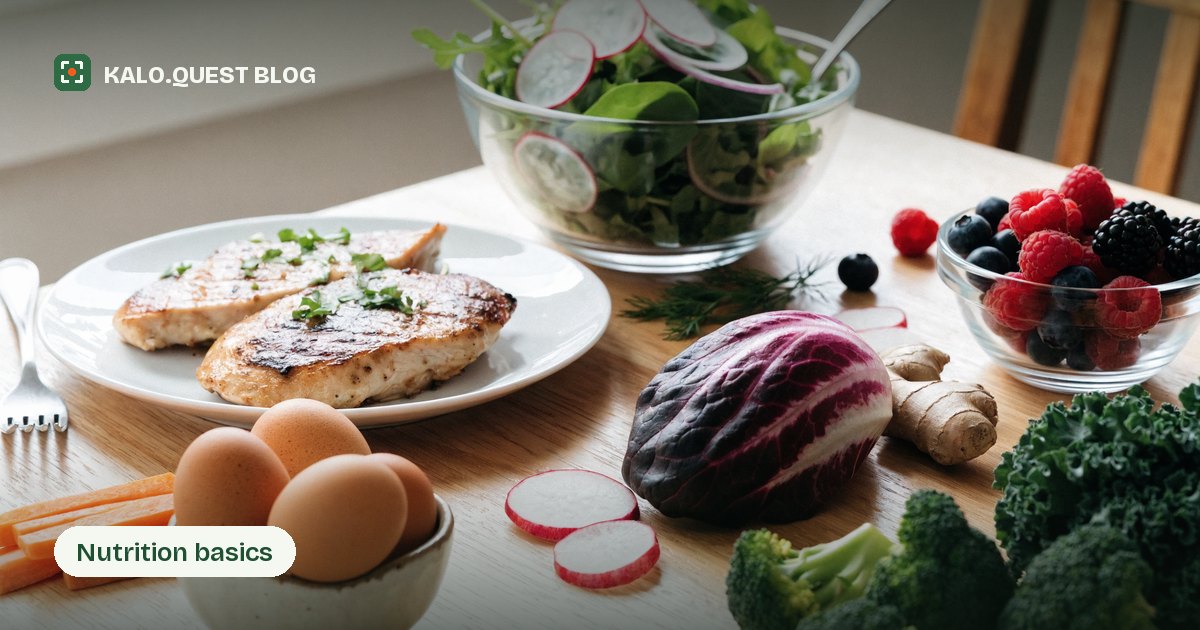
No food burns fat. The best foods for weight loss are simply the ones that deliver a lot of fullness per calorie, which makes eating below maintenance feel like a normal day instead of an act of willpower. Fullness per calorie comes from three properties, and all three are measurable: protein content, fiber content, and water content. Below are the numbers, from USDA FoodData Central, and the plate proportions Harvard T.H. Chan School of Public Health recommends.
This is general information for healthy adults, not medical advice, and it does not replace a doctor or a registered dietitian.
What are the best foods for weight loss?
Foods with a high protein or fiber content relative to their calories. Here is what that looks like in figures, all of them from USDA FoodData Central for the portion stated.
| Food and portion | Calories | Protein | Fiber |
|---|---|---|---|
| Broccoli, boiled and drained, 100 g | 35 | 2.4 g | 3.3 g |
| Apple with skin, 1 medium (182 g) | 95 | 0.5 g | 4.4 g |
| Greek yogurt, plain, nonfat, 6 oz (170 g) | 100 | 17 g | 0 g |
| Baked potato with skin, 1 medium (173 g) | 161 | 4.3 g | 3.8 g |
| Rolled oats, dry, 1/2 cup (40 g) | 152 | 5.3 g | 4.0 g |
| Salmon, Atlantic, farmed, cooked, 3 oz (85 g) | 175 | 19 g | 0 g |
| Chicken breast, roasted, skinless, 4 oz (113 g) | 186 | 35 g | 0 g |
| Egg, hard-boiled, 1 large (50 g) | 78 | 6 g | 0 g |
| Lentils, cooked, 1 cup (198 g) | 230 | 18 g | 16 g |
| Black beans, cooked, 1 cup (172 g) | 227 | 15 g | 15 g |
| Brown rice, cooked, 1 cup (202 g) | 248 | 5.5 g | 3.2 g |
These are examples of categories rather than a ranking. Any lean protein, any non-starchy vegetable, any intact whole grain and any legume behaves the same way in a meal.
Why do some foods keep you full on far fewer calories?
Because protein, fiber and water all add bulk or satiety signal without adding much energy. Fiber is the clearest case to put a number on. The Nutrition Source at Harvard T.H. Chan School of Public Health states that children and adults need at least 25 to 35 grams of fiber a day for good health, while most Americans get only about 15 grams. It also describes fiber as helping regulate the body’s use of sugars, keeping hunger and blood sugar in check, with soluble fiber slowing digestion and fiber in general supporting the gut microbiome.
Look back at the table with the fiber gap in mind. One cup of cooked lentils supplies 16 grams, roughly the entire daily amount most Americans currently manage, for 230 calories. That is the whole mechanism of choosing the best foods for weight loss: not fewer calories eaten by force, but the same calories arranged so that hunger arrives later.
How much of your plate should each food take up?
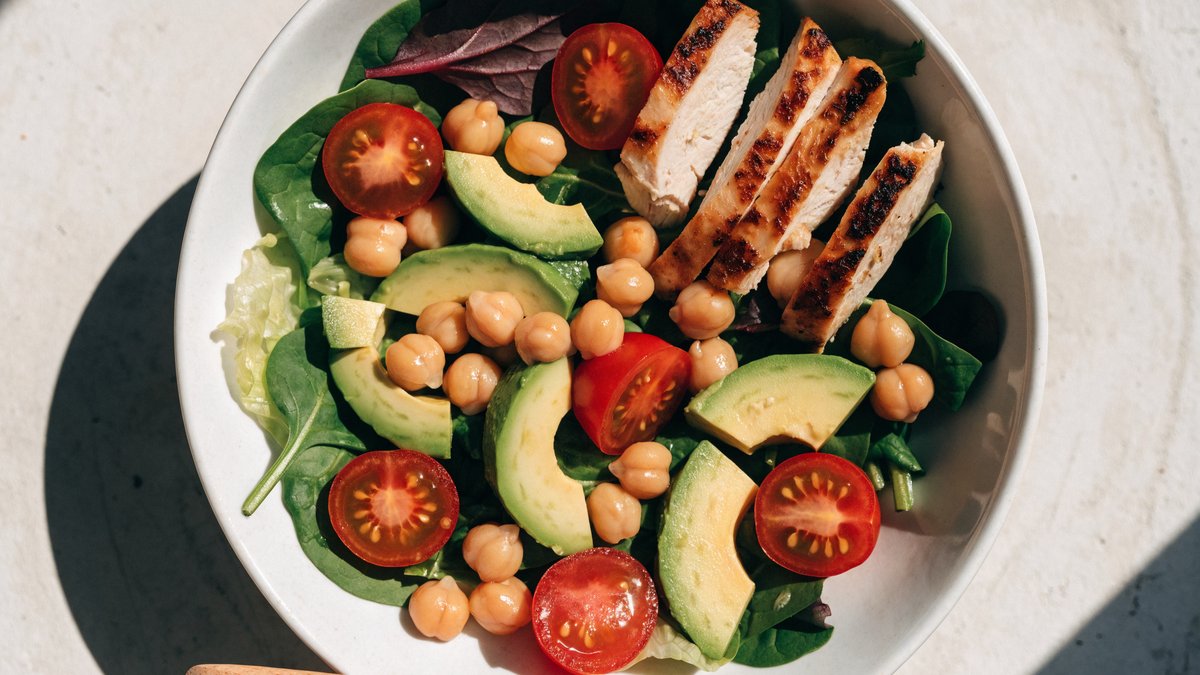
Harvard T.H. Chan School of Public Health gives proportions rather than portions in its Healthy Eating Plate: about half the plate vegetables and fruits, a quarter whole grains, and a quarter protein, with healthy oils such as olive oil for cooking, butter limited, and water, tea or coffee with little or no sugar as the drink.
| Part of the plate | Share | Practical version |
|---|---|---|
| Vegetables and fruits | About 1/2 | Two vegetables, or one plus a piece of fruit |
| Whole grains | About 1/4 | Brown rice, oats, barley, whole-wheat bread |
| Protein | About 1/4 | Fish, poultry, eggs, legumes, tofu |
The proportions do the work that counting would otherwise do. A plate built this way lands in a reasonable calorie range without arithmetic, because the half that is vegetables is the cheapest half in energy terms.
Refined grains are worth swapping for intact ones on the same logic. Trading white rice for brown rice, or white bread for whole-wheat bread, keeps the calories similar and multiplies the fiber. Sourdough is not part of that trade: it names a fermentation method, not a grain, and most commercial sourdough is made from refined white flour.
Which foods are worth measuring instead of eyeballing?
The energy-dense ones, where a small visual difference is a large calorie difference: cooking oils, butter, dressings, nut butters, nuts, cheese, and anything sweetened that you drink. None of these needs to be avoided. They need to be counted, because they are the items your eye is worst at reading. A tablespoon of olive oil disappears into a pan visually while carrying real calories; the exact figure is in our guide to estimating a plate from a photo.
Everything in the first table can be eyeballed. That division, measure the dense, estimate the bulky, is what keeps food logging sustainable rather than exhausting.
What does a day of these foods actually look like?
Assembled, the categories stop being abstract:
- Breakfast. Greek yogurt with oats and berries. The yogurt and oats alone come to 252 calories and 22 grams of protein, before the fruit.
- Lunch. A large salad of leafy greens, tomato and cucumber with a chicken breast portion and a measured spoon of olive oil.
- Snack. An apple at 95 calories, or a hard-boiled egg at 78.
- Dinner. Baked salmon, roasted broccoli, and a cup of brown rice.
Nothing on that list is a diet food. The shape is what matters, not the menu, and every item can be swapped for another from the same category.
Are there foods you have to cut out to lose weight?
No, and the evidence on this is unusually clear. Sacks and colleagues randomized 811 overweight adults to four diets with different fat, protein and carbohydrate compositions and followed them for two years, reporting in the New England Journal of Medicine on February 26, 2009 that weight loss was similar across all four, and concluding that reduced-calorie diets produce clinically meaningful weight loss regardless of which macronutrients they emphasize. Attendance at the support sessions predicted results better than the diet assignment did.
The consequence is worth stating plainly: choosing better foods does not replace the energy deficit, it makes the deficit easier to hold. If your calorie total does not come down, no shopping list will move the scale, which is why your daily calorie number and how a deficit works come before food selection, and why protein targets come before anything else on the plate.
This article covers food choice for healthy adults. It does not rank individual foods, does not address food allergies or intolerances, and is not a plan for any medical condition, including diabetes, kidney disease, pregnancy or an eating disorder. For those, the plan comes from a healthcare professional.
Kalo.Quest is an app on Google Play and the App Store that photographs the plate and returns calories, protein, carbohydrates and fat into the day’s journal, which is the fastest way to find out whether the plate you built matches the plate you intended. It is free and ad supported, with an ad after each analysis and a limit of 30 photo analyses a day; an optional rewarded video adds one more, and there is no account to create.
FAQ
Do negative-calorie foods exist?
No. No food costs more energy to digest than it supplies, and celery is the usual example given for a claim that has never been demonstrated. What does exist is the range in the table above: 35 calories for 100 grams of cooked broccoli against 248 for a cup of brown rice. Very low, not negative, is the honest description.
Are frozen and canned vegetables as good as fresh ones for weight loss?
For this purpose, yes. Frozen and canned vegetables carry effectively the same calories, fiber and bulk as fresh, and USDA FoodData Central lists them with comparable values. Canned versions can be higher in sodium, which affects water retention and therefore the scale reading, but not body fat. Availability matters more than form, since the vegetable you actually cook is the one that counts.
Can you lose weight eating only healthy foods without counting anything?
Sometimes, and it depends on portions. Nuts, olive oil, cheese and whole grains are all nutritious and all energy-dense enough to exceed a target without effort. The Healthy Eating Plate proportions do a lot of the work automatically, but if the weekly trend is flat after three weeks, the calories are the thing to look at.
This article is general information, not medical advice. For personal guidance, talk to a healthcare professional.