
How Much Fiber Do You Need Per Day?
How much fiber per day: Harvard says 25 to 35 grams, the FDA label uses 28, and most Americans get only 15. Here are the grams in real portions.
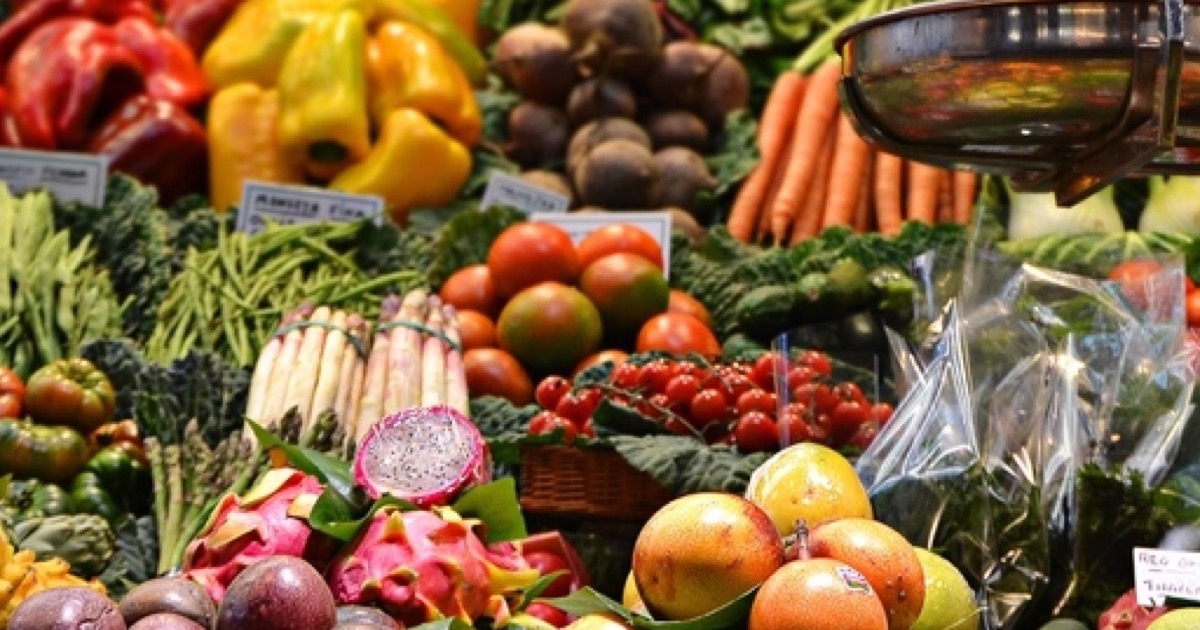
How much fiber per day: 28 grams, the Daily Value the US Food and Drug Administration prints on the Nutrition Facts label for a 2,000 calorie diet. It sits inside the 25 to 35 grams Harvard T.H. Chan School of Public Health recommends, and well above the roughly 15 grams most Americans eat.
Key takeaways
- The typical shortfall is about 13 grams a day, which is one cup of beans, or a cup of raspberries plus an apple.
- Raspberries are the cheapest fiber on the table at 8 grams for 64 calories, while a cup of lentils delivers 15.6 grams.
- Refining is visible slice by slice: whole-wheat bread carries 1.9 grams against 0.8 for white.
- Harvard advises raising intake gradually and drinking more fluids, because a sudden significant increase causes bloating and cramping.
- Psyllium or methylcellulose can fill a gap, but Harvard states supplements are not intended to completely replace high-fiber foods.
This is general information for healthy adults, not medical advice, and it does not replace a doctor or a registered dietitian.
How much fiber per day, in one number
Aim for 28 grams. That is the FDA Daily Value for dietary fiber on a 2,000 calorie diet, it sits inside the 25 to 35 gram range Harvard T.H. Chan School of Public Health gives on The Nutrition Source, and it is the figure every American food label is already scaled to. Reading a box that says 20% of the Daily Value means 5.6 grams in that serving.
The average American intake of about 15 grams means the typical shortfall is roughly 13 grams a day. That is one cup of beans, or a cup of raspberries plus an apple.
What fiber does, and why the shortfall matters
Fiber helps regulate the body’s use of sugars, which keeps hunger and blood sugar in check, according to The Nutrition Source. Harvard T.H. Chan School of Public Health links adequate fiber intake to lower risk of heart disease, type 2 diabetes, diverticular disease and constipation, and notes that fiber’s role in the gut microbiome may produce anti-inflammatory effects.
The two types do different jobs, and Harvard names the foods for each:
- Soluble fiber dissolves in water, can lower blood cholesterol and helps prevent surges in blood glucose. Found in oatmeal, chia seeds, nuts, beans, lentils, apples and blueberries.
- Insoluble fiber does not dissolve, and promotes digestive regularity. Found in whole wheat products and especially wheat bran, quinoa, brown rice, legumes, leafy greens such as kale, almonds, walnuts, seeds, and fruits with edible skins.
Most whole foods carry both, which is why the practical instruction is to eat a range of plants rather than to sort them into categories.
Which foods carry the most fiber per portion?
Every value below is from USDA FoodData Central, for the portion stated. The calorie column is there because fiber arrives at very different prices.
| Food and portion | Fiber | Calories |
|---|---|---|
| Lentils, cooked, 1 cup (198 g) | 15.6 g | 230 |
| Black beans, cooked, 1 cup (172 g) | 15.0 g | 227 |
| Chia seeds, 1 oz (28.35 g) | 9.8 g | 138 |
| Raspberries, 1 cup (123 g) | 8.0 g | 64 |
| Avocado, half (100 g) | 6.7 g | 160 |
| Broccoli, cooked, 1 cup chopped (156 g) | 5.1 g | 55 |
| Apple, 1 medium (182 g) | 4.4 g | 95 |
| Almonds, 1 oz (28.35 g) | 3.5 g | 164 |
| Brown rice, cooked, 1 cup (202 g) | 3.2 g | 248 |
| Whole-wheat bread, 1 slice (32 g) | 1.9 g | 81 |
| White bread, 1 slice (29 g) | 0.8 g | 77 |
Raspberries are the standout on the calorie column, delivering 8 grams of fiber for 64 calories. Legumes deliver the largest absolute amounts, more than half a day’s target in one cup. The two bread rows show what refining removes: same slice, same meal, a difference of 1.1 grams.
How to close a 13 gram gap without redesigning your diet
Harvard T.H. Chan School of Public Health suggests swaps rather than rules: whole fruit instead of juice, brown rice instead of white rice, and beans in place of some meat. Four changes of that size more than cover the average shortfall:
- Add half a cup of black beans to whatever you already eat at lunch. That is 7.5 grams.
- Eat the apple instead of drinking the juice. That is 4.4 grams the juice does not have.
- Move from white to whole-wheat bread on a two-slice sandwich. That is 2.2 grams.
- Stir half an ounce of chia seeds, about two tablespoons, into yogurt or oatmeal. That is 4.9 grams.
Two cautions come from the same source. Harvard advises increasing fiber gradually, because a sudden significant increase can cause bloating and cramping, and drinking more fluids alongside it to lessen those effects. On supplements, The Nutrition Source says psyllium or methylcellulose can be used if eating enough fiber through food is difficult, but that fiber supplements are not intended to completely replace high-fiber foods.
Fiber, fullness and the calorie question
Fiber is one of the three properties that make a food filling per calorie, alongside protein and water content, which is the logic behind most of the foods that keep you full while eating less. High-fiber foods also tend to be slow to eat, and the raspberry row above shows how far 64 calories can go.
Counting fiber by memory is hard, because it hides in portions rather than in labels. Kalo.Quest is an app on Google Play and the App Store that returns calories, protein, carbohydrates and fat from a photo of the plate, into the day’s journal, with a written description as an alternative when a photo is awkward. It gives a daily calorie goal built from your profile, keeps a weight and activity log, and is free and ad supported, with 5 free AI analyses a day and 3 more per rewarded video, and no account to create. Seeing a week of real meals next to a target is also the fastest way to notice how few of them contain a legume, which pairs well with tracking macros for a couple of weeks.
This article covers general fiber intake for healthy adults. It does not cover low-fiber or low-residue diets prescribed after surgery, fiber management in inflammatory bowel disease or irritable bowel syndrome, or intake during pregnancy, breastfeeding or childhood, all of which are matters for a clinician.
FAQ
How much fiber per day is too much?
Harvard T.H. Chan School of Public Health frames 25 to 35 grams as a floor rather than a cap, and the discomfort people report at high intakes usually comes from speed rather than total. A sudden significant increase can cause bloating and cramping, which is why the same source recommends raising intake gradually and drinking more fluids. Someone eating well past 35 grams with no symptoms has no reason to cut back.
Does fiber from a supplement count the same as fiber from food?
Partly. The Nutrition Source says psyllium or methylcellulose powders and wafers can be used when eating enough fiber through food is difficult, while stating that supplements are not intended to completely replace high-fiber foods. Whole foods bring potassium, magnesium and polyphenols that a powder does not, so a supplement is best treated as a gap filler rather than a strategy.
Do fruit and vegetable skins matter?
Yes, and measurably. Harvard T.H. Chan School of Public Health lists fruits with edible skins among the insoluble fiber sources, and USDA FoodData Central puts a medium apple with skin at 4.4 grams of fiber. Peeling removes a meaningful share of that for no calorie saving worth counting, so leaving skins on apples, pears and potatoes is a free gain.
This article is general information, not medical advice. For personal guidance, talk to a healthcare professional.