7 Common Calorie Counting Mistakes (and How to Fix Them)
The calorie counting mistakes that hide hundreds of calories a day: unlogged oil, drinks, servings read as portions, and weekends that never get logged.
Most calorie counting mistakes are not arithmetic problems. They are omissions: the oil in the pan, the drinks, the second serving read as one, the two days a week nobody logs. Each is small enough to feel unimportant and large enough, repeated daily, to erase a deficit. The seven below are ordered by how much they typically hide, with the fix next to each.
This article is general information for healthy adults. It is not medical advice and does not replace a doctor or a registered dietitian. Calorie tracking is not appropriate during pregnancy or breastfeeding, for anyone under 18, or for anyone with a history of an eating disorder, except under professional supervision.
Mistake 1: leaving cooking fat out of the log
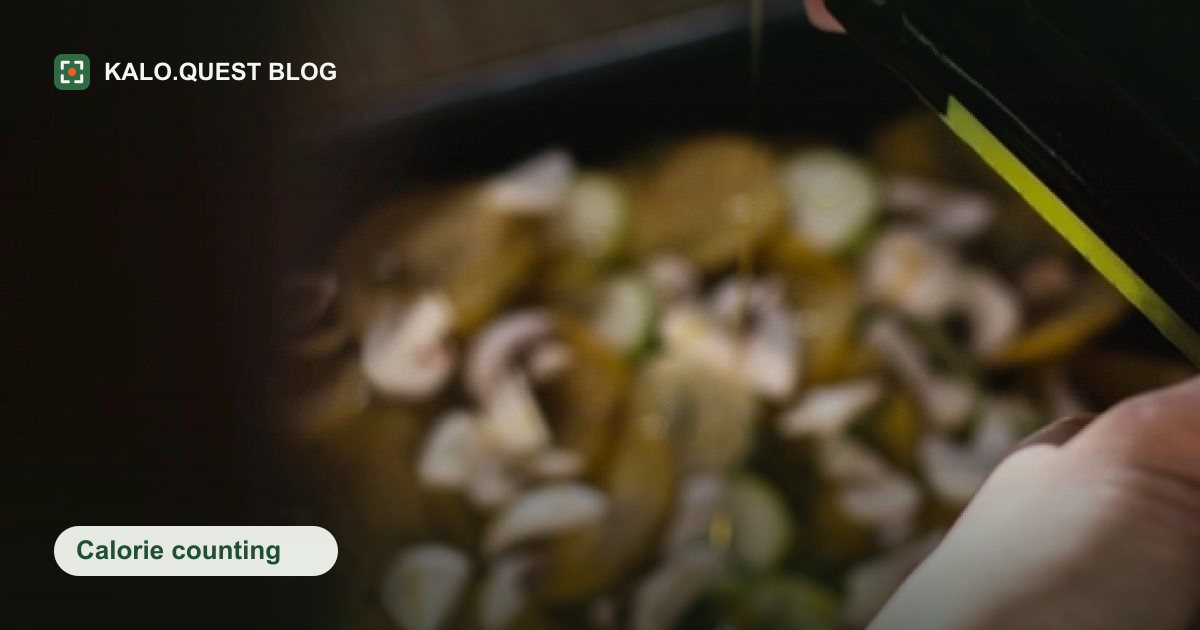
Fat carries more than twice the energy of the other macronutrients. The Atwater factors used behind USDA food composition data put protein and carbohydrate at 4 calories per gram and fat at 9, which the USDA Agricultural Research Service traces back to Wilbur O. Atwater’s work at the turn of the twentieth century. A tablespoon of oil weighs about 13.5 grams and is essentially pure fat, which puts it near 120 calories before anything else touches the pan.
The fix. Log the fat you cook with as its own line, before the meal, while the bottle is still in your hand. Two tablespoons across a day of home cooking is roughly 240 calories, which is most of a typical 500-calorie deficit.
Mistake 2: drinking calories without counting them
Liquid calories are logged less often than solid ones because they do not feel like eating. The Centers for Disease Control and Prevention reports that U.S. adults consumed an average of 145 calories from sugar-sweetened beverages on a given day during the 2011 to 2014 National Health and Nutrition Examination Survey, and that 49% of adults drank at least one on any given day.
The fix. Give drinks their own log entry the moment they are poured, alcohol included. Alcohol supplies about 7 calories per gram and belongs to none of the three macronutrient targets, so a drinking evening can fill a calorie ceiling while the protein, carbohydrate and fat lines still look untouched.
Mistake 3: logging the serving instead of the portion
These are two different quantities, and the label only knows one of them. The National Institute of Diabetes and Digestive and Kidney Diseases puts it in one line in its guide to food portions: a portion is how much you choose to eat, a serving is the amount printed on the Nutrition Facts label.
The U.S. Food and Drug Administration’s own worked example is a frozen lasagna at 280 calories per 1-cup serving, four servings to the container. Eating the container is 1,120 calories. Nobody misread a number, and the log is off by 840 calories.
The fix. Read servings per container before serving size, every time. How to read a nutrition label covers the order that prevents this one.
Mistake 4: reconstructing the day from memory at night
Recall is not a neutral instrument. In the New England Journal of Medicine of December 31, 1992, Steven W. Lichtman and colleagues studied obese subjects who reported eating about 1,028 calories a day and measured their actual intake at 2,081 calories, an underreport of 47%, while physical activity was overreported by 51%. The subjects were not lying. Memory simply drops items, and it drops them in one direction.
The fix. Log at the meal, not at midnight. A photo taken before the first bite is a record that does not depend on remembering anything later.
Mistake 5: treating a week as five days
A log that stops on Friday describes a diet nobody follows. Restaurant meals are the usual weekend content, and they are large: the National Heart, Lung, and Blood Institute notes that the amount of food served when eating out has nearly doubled over the past twenty years.
The fix. Log the weekend first and the weekday second, since the weekday is the part you could already estimate. Counting calories when eating out covers the estimates that work without a scale.
Mistake 6: trusting a printed number to the calorie
Labels are estimates with a legal tolerance around them. FDA guidance for industry on nutrition labeling databases sets the compliance standard under 21 CFR 101.9(g)(4) so that, for calories, sugars, total fat, saturated fat and cholesterol, the laboratory result compared with the declared amount “must be 120% or less.” A bar printed at 200 calories can test at 240 and remain compliant.
The underlying model has its own error. USDA Agricultural Research Service scientists David Baer and Janet Novotny measured almonds and found 129 calories per ounce against the 168 calories declared on labels, because some of the fat in a whole nut is never absorbed.
The fix. Treat every entry as an estimate with a margin, and judge the week rather than the meal. A single figure being 15% off matters far less than a habit of skipping entries.
Mistake 7: chasing precision you will not sustain
The most expensive of the calorie counting mistakes is quitting. A gram-accurate log kept for nine days tells you less than a rough log kept for three months, because weight change is only readable as a trend across weeks.
The fix. Pick the method you will still be using in week six. Weigh the staples you eat constantly, estimate the rest, and accept a margin in exchange for a complete record.
What this list does not cover
These are logging errors, not diet design. Choosing a target, splitting it into macronutrients, and deciding what to eat are separate questions, and what a calorie deficit is covers the first of them. No article can prescribe an intake for an individual, and anyone with a medical condition should get that number from a clinician.
Two of these calorie counting mistakes, forgotten items and midnight reconstruction, come from the same friction: manual logging asks for a search, a database entry and a portion guess at the exact moment you want to eat. Kalo.Quest is an app on Google Play and the App Store that removes that step by reading calories, protein, carbohydrate and fat from a photo of the plate, or from a written description of the meal, straight into the day’s log. It is free and ad supported, allows 5 free AI analyses a day, with an optional rewarded video for 3 more, needs no account, and does not keep your meal photos. The mechanics are in how to count calories from a photo.
FAQ
How many calories a day do these mistakes typically hide?
The published estimates are large. Lichtman and colleagues measured a gap of just over 1,000 calories a day between what participants reported and what they ate, and the CDC’s 145-calorie daily average from sugar-sweetened beverages is one item inside a gap that size. A deficit of 500 calories a day disappears entirely inside errors of that scale.
Do you have to weigh food to count calories accurately?
No, but a scale calibrates the estimates you make without one. Weighing the five or six foods you eat most often for two weeks teaches you what those portions look like, after which visual estimates stay reasonable for months. The scale is a training tool more than a permanent requirement.
Is it a mistake to eat back the calories from exercise?
Not automatically, though activity is the number people overstate most. The 1992 Lichtman study found physical activity overreported by 51%, and fitness trackers estimate rather than measure energy expenditure. Adding back part of a workout’s estimated burn, rather than all of it, keeps the error from reversing the deficit.
This article is general information, not medical advice. For personal guidance, talk to a healthcare professional.